
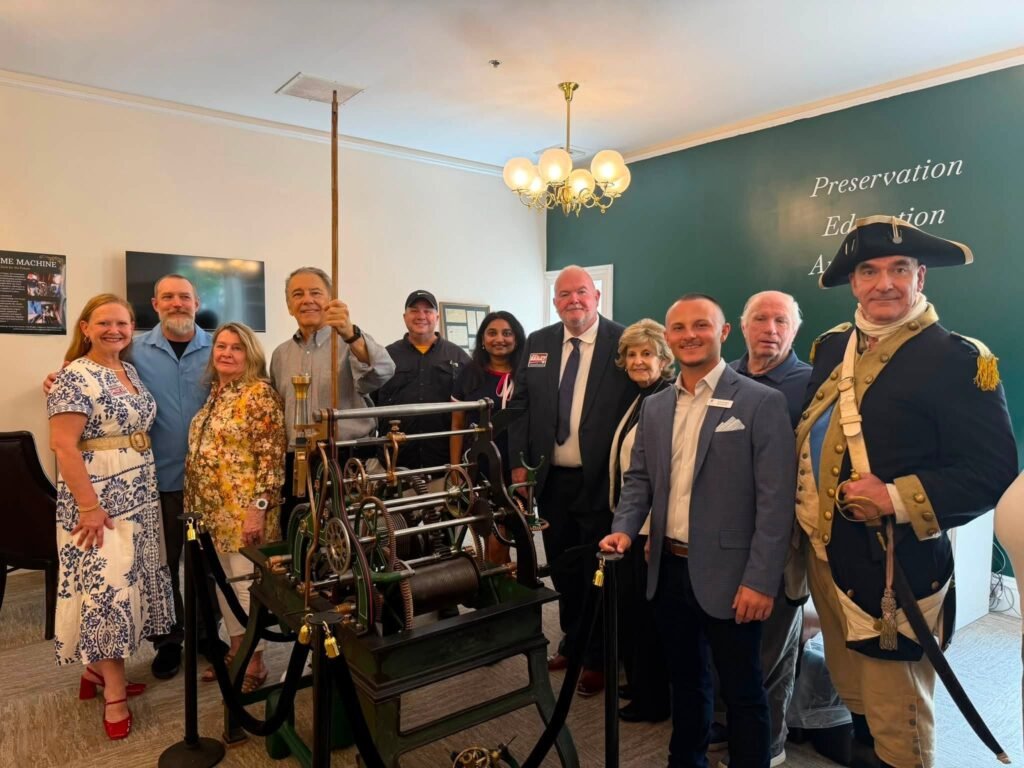
CONCORD — Historic Cabarrus Association marked a milestone Saturday with the soft launch of its new Historic Visitors Center inside the historic Cabarrus County Courthouse in downtown Concord.
Nearly 70 community members attended the Aug. 29 event, getting an early look at a space designed to introduce residents and visitors to Cabarrus County’s history.
“Today was a big day for the Historic Cabarrus Association,” the organization said in announcing the opening. “We officially soft launched our new Historic Visitors Center and were thrilled to be joined by nearly 70 community members for the occasion.”
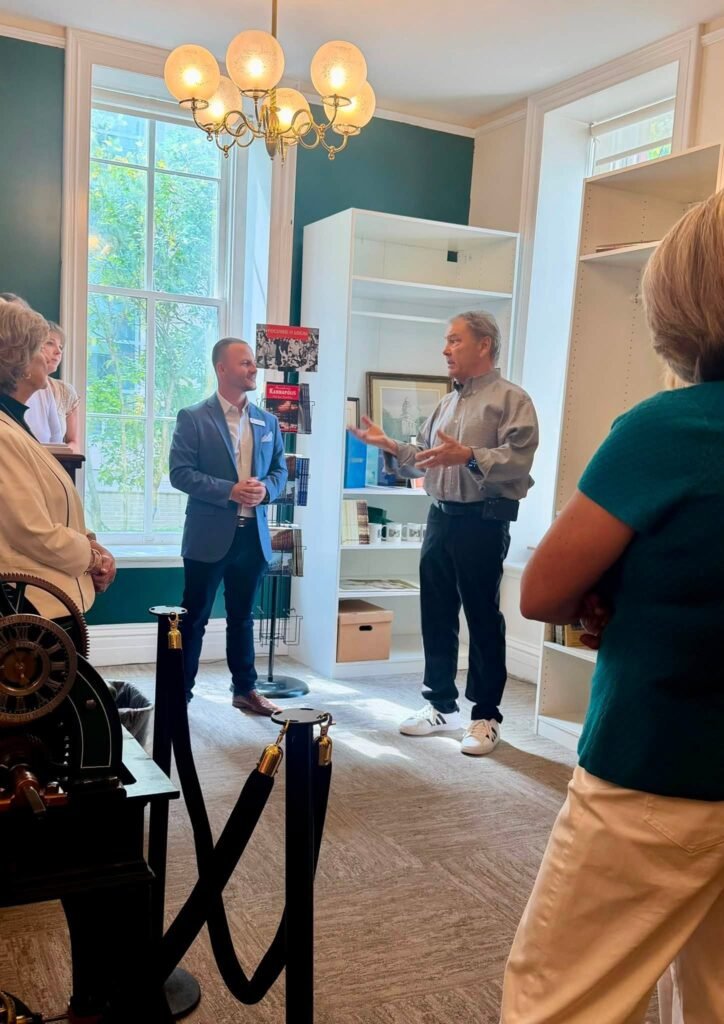
Located in the historic courthouse, the Visitors Center will be open to the public and is intended to serve as a destination where people can learn about the people, places and events that shaped Cabarrus County.
“We’re incredibly excited about what this space will mean for our community and look forward to welcoming everyone through its doors,” Historic Cabarrus said.
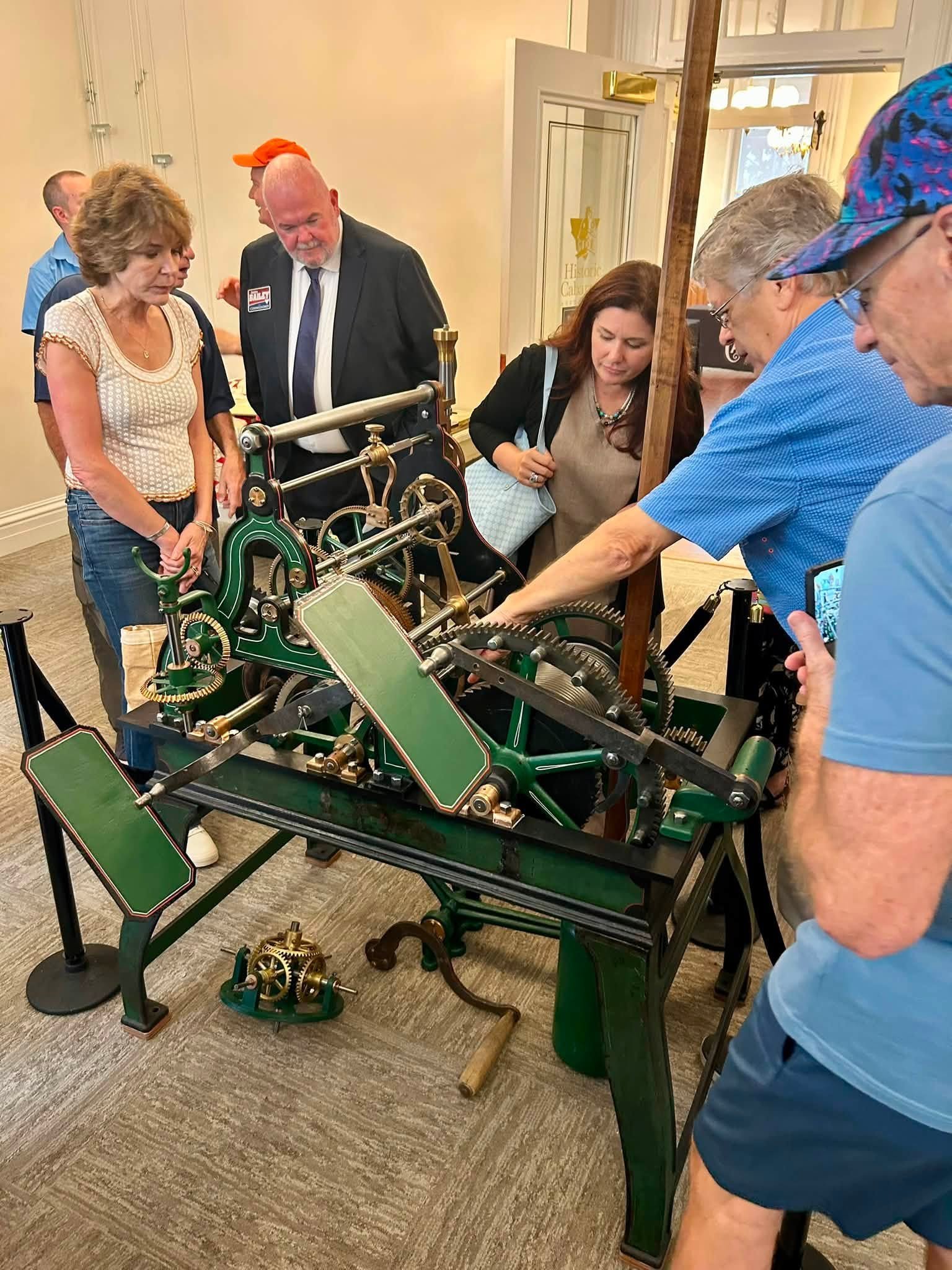
Among the exhibits currently on display is one devoted to a familiar downtown Concord landmark — the Cabarrus County Courthouse clock. The multi-panel exhibit, titled “Time Machine,” traces the clock’s 150-year history, its mechanics and the long-running effort to preserve and restore it.
A clock dating to 1876
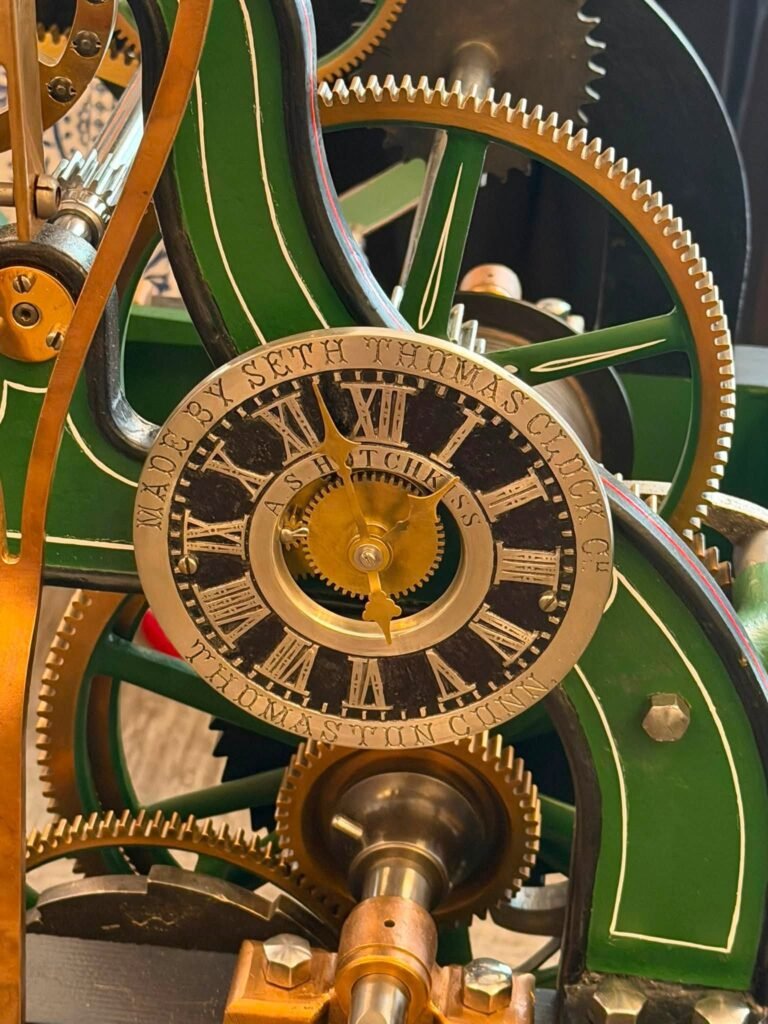
According to the exhibit, the courthouse clock was purchased in 1876 for $630. It is an A.S. Hotchkiss Model 12A time-and-strike clock, paired with a nearly 1,000-pound Meneely bell.
Andrew Stephen Hotchkiss designed and built tower clocks before joining the Seth Thomas Company in the early 1870s and continued working with the company into the 1890s. Seth Thomas records credit Hotchkiss with roughly 100 tower-clock movements.
The company offered several configurations, including time-only, time-and-strike, and time-strike-and-chime mechanisms. Concord’s courthouse received the Hotchkiss-designed Model 12A time-and-strike clock.
The exhibit explains that Seth Thomas offered complete tower-clock installations in several arrangements. Concord used a standard “bell-below-movement” configuration, with the clock paired with a stationary 994-pound Meneely Rotary Yoke bell. A single strike hammer sounded the bell, although surviving evidence suggests an additional chime assembly may once have been present.
For generations, maintaining the clock required considerably more than simply resetting the hands.
Its original weight-driven mechanism required regular winding, cleaning, oiling and adjustment, and temperature changes could affect its accuracy. If maintenance fell behind, the clock could lose time or stop.
By 1946, the mechanism had been electrified, replacing the original weight-driven operation with electric components.
Generations of preservation
The exhibit chronicles several efforts to keep the clock and tower in working condition.
The bell and platform were reported restored in the early 1970s, followed by another effort in 1976-77 to return the clock to working condition and clean the tower. Newspaper accounts from those years documented both the work and the public’s interest in maintaining the courthouse clock as part of Concord’s daily life.
Allen McDonald played an important role in those earlier preservation efforts, according to the exhibit. Surviving original components were later credited to his decision to save them rather than discard them.
Restoration discussions began again in 2009, with a restoration effort getting underway in 2015.
By the time the modern restoration effort began, the clock was no longer functioning as a time-and-strike mechanism. Components were missing, the dials had deteriorated, portions of the tower raised structural concerns, and the bell showed the effects of decades inside the belfry.
In August 2018, the mechanism was carefully removed from the tower, allowing it to be documented, disassembled, cleaned, repaired and studied in ways that had not been possible while it remained in place. New clock dials were installed in 2019.
The restoration brought together specialized craftsmanship, historical research and community support. Phil Wright of The Tower Clock Company fabricated replacement parts, provided and installed new dials, and helped guide restoration and maintenance planning.
Scott Schmeiser and Cabarrus Time Savers documented components, assisted with disassembly and reassembly of the mechanism, conducted historical research and supported the project through advocacy and fundraising.
The exhibit also credits Cabarrus County, Cabarrus Time Savers, residents of Historic Concord, Historic Cabarrus board members and other community members with supporting preservation of the clock.
Connecting past and future
The introductory panel places the clock within a broader story of Concord and Cabarrus County.
“For 150 years, the Cabarrus County Courthouse clock has marked more than the passing of hours,” the exhibit reads.
Its mechanisms continued measuring time as the community around the courthouse changed, making the clock an example of 19th-century craftsmanship as well as generations of repair, adaptation and preservation.
The exhibit describes its “Time Machine” theme as an invitation to look beyond the clock face and consider what it means to preserve something that was itself built to measure change.
As restoration seeks to return the mechanism to its original weight-driven design, the clock provides a tangible connection among Concord’s past, those working to preserve its history today and the future of one of downtown’s most recognizable landmarks.
That connection between the county’s past and present is also at the heart of Historic Cabarrus’ new Visitors Center. With Saturday’s soft launch complete, the organization plans to welcome the public into the historic courthouse to experience more of Cabarrus County’s history firsthand.
